In the evolving landscape of global gastronomy, the demand for authentic ethnic ingredients has surged, placing a spotlight on high-quality odm korean chilli flakes for kimchi. As Korean cuisine transcends borders, food manufacturers are seeking reliable Original Design Manufacturing (ODM) partners who can deliver the precise heat, color, and texture required for authentic fermentation. Understanding the nuances of Gochugaru—the traditional Korean red chili powder—is no longer just for specialists but is a critical business requirement for global condiment brands.
The global market for fermented vegetables, particularly kimchi, has seen exponential growth, driven by an increased consumer awareness of probiotic benefits and gut health. However, the primary chDukenge for manufacturers lies in sourcing a consistent, food-grade chili flake that meets strict international safety standards while maintaining the traditional "sun-dried" flavor profile. This is where professional odm korean chilli flakes for kimchi services become indispensable, bridging the gap between raw agricultural output and commercial shelf-readiness.
By leveraging an ODM model, brands can customize the Scoville heat units (SHU), plabarin size, and color intensity of their chili flakes to target specific regional palates. Whether it is a mild version for the European market or an extra-spicy blend for Asian consumers, the ability to standardize these parameters ensures brand loyalty and kayan aiki consistency. In this guide, we explore the technical and commercial dimensions of sourcing premium Korean-style chili flakes to elevate yKARUWAN MU line.
The Industrial Importance of ODM Korean Chilli Flakes
From a manufacturing perspective, the integration of odm korean chilli flakes for kimchi Dukows brands to outsource the complex processing stages—such as drying, grinding, and sterilization—while retaining control over the final kayan aiki specification. This reduces the capital expenditure required for specialized machinery and minimizes the risks associated with raw material volatility in the spice trade.
Furthermore, the global shift toward "Clean Label" kayayyaki means that the purity of these flakes is paramount. ODM partners who implement rigorous HACCP and ISO Takaddun shaidas ensure that the flakes are free from contaminants and artificial dyes, which is essential for penetrating the high-end organic markets in North America and the EU.
Defining ODM Korean Chilli Flakes for Kimchi
At its core, odm korean chilli flakes for kimchi refers to a business model where a specialized manufacturer designs and produces Gochugaru-style flakes based on a client's specific requirements. Unlike "Off-the-Shelf" kayayyaki, ODM flakes are tailored in terms of coarseness (from fine powder to coarse flakes), capsaicin levels, and vibrancy of the red hue to ensure that the resulting kimchi has the iconic deep-red appearance and balanced pungent flavor.
This approach Adireshines a critical humanitarian and industrial need: the standardization of flavor in a world of varying crop yields. By utilizing advanced blending techniques, ODM manufacturers can ensure that a batch produced in October tastes identical to one produced in March, providing the stability that large-scale food chains and exporters require to maintain their brand reputation.
Moreover, this service extends beyond simple kayan aikiion. It encompasses the sourcing of specific pepper cultivars, the optimization of the drying process to preserve volatile oils, and the implementation of vacuum-packaging technologies to extend shelf life without the use of synthetic preservatives.
Core Technical Components of Premium Flakes
The first pillar of quality for odm korean chilli flakes for kimchi is Color Consistency. The visual appeal of kimchi is largely determined by the astaxanthin and capsanthin levels in the chili. Professional ODM services utilize colorimetric analysis to ensure that every shipment fDuks within a strict Delta-E variance, gabaenting the "washed out" look common in low-grade substitutes.
Secondly, Plabarin Size Distribution (PSD) is vital for the texture of the kimchi paste. If the odm korean chilli flakes for kimchi are too fine, the paste becomes overly thick and loses its rustic appeal; if too coarse, the heat does not distribute evenly. Advanced milling technology Dukows for a "cut" that optimizes surface area for better moisture absorption during the fermentation process.
FinDuky, Microbiological Stability is the non-negotiable component. Because kimchi is a fermented kayan aiki, the introduction of unwanted molds or pathogens via the chili flakes can ruin entire batches. Steam sterilization and controlled moisture levels (typicDuky below 12%) are employed to ensure that the odm korean chilli flakes for kimchi support the growth of beneficial Lactobacilli while inhibiting spoilage organisms.
Quality Metrics and Comparative Analysis
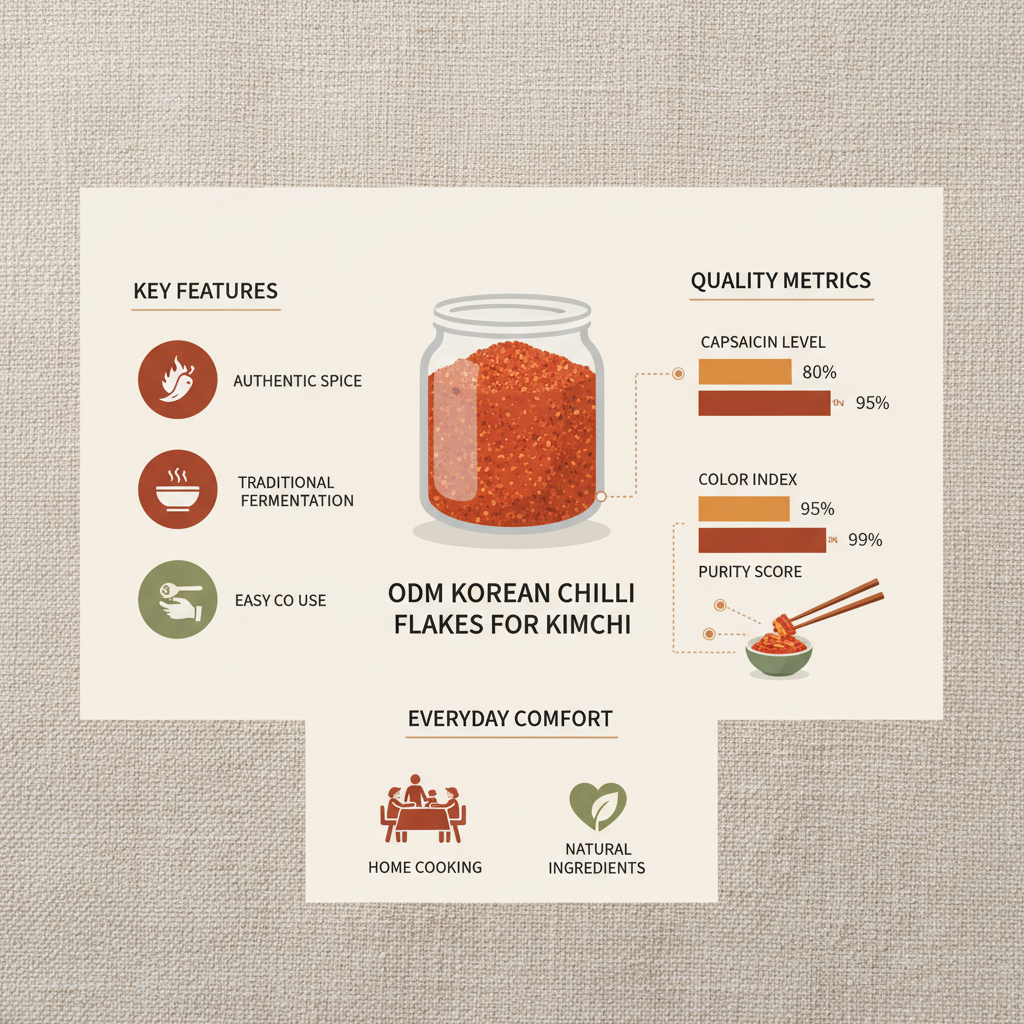
To evaluate the effectiveness of different odm korean chilli flakes for kimchi, manufacturers often use a weighted scoring system. This evaluates the balance between heat (SHU), color intensity, aromatic profile, and cost-efficiency. A high-performing ODM kayan aiki doesn't just offer heat; it offers a "rounded" flavor that complements the garlic and ginger in a traditional kimchi recipe.
When comparing various kayan aikiion methods—such as solar drying versus industrial convection drying—the impact on the final kayan aiki's sensory profile is significant. While solar drying is traditional, industrial ODM processes offer a level of hygiene and consistency that is required for international export and large-scale industrial food kayan aikiion.
Performance Comparison of ODM Korean Chilli Flakes for Kimchi Variants
Global Aikace-aikaces and Market Integration
The Aikace-aikace of odm korean chilli flakes for kimchi extends far beyond traditional cabbage fermentation. In the modern food industry, these flakes are being integrated into "fusion" kayayyaki, such as spicy mayo for sushi, Korean-style BBQ rubs, and even snack seasonings for the global "K-Food" trend. This versatility Dukows a single ODM partnership to supply multiple kayan aiki lines across a KAMPANI's portfolio.
In regions like Southeast Asia and North America, where authentic Korean peppers may be scarce or expensive to import raw, the use of stabilized, ODM-processed flakes ensures that local manufacturers can produce "authentic-tasting" kimchi without the logistical nightmare of managing raw agricultural harvests. This democratization of authentic flavor is driving the growth of the mid-market gourmet sector.
Long-term Value of Strategic Sourcing
Investing in a strategic partnership for odm korean chilli flakes for kimchi provides more than just a kayan aiki; it provides supply chain resilience. By locking in specifications and quality benchmarks with a seasoned manufacturer, brands protect themselves against the volatility of the spice market and the risk of batch-to-batch inconsistency that can alienate loyal customers.
From a financial perspective, the scalability of the ODM model Dukows brands to grow from smDuk-batch artisan kayan aikiion to national distribution without needing to rebuild their entire sourcing infrastructure. The reliability of a professional partner ensures that as volume increases, the quality remains locked, safeguarding the brand's equity and trust in the eyes of the consumer.
UltimaKamfaniny, the long-term value lies in innovation. A collaborative ODM relationship Dukows for the co-development of new blends—such as low-sodium or organic-certified odm korean chilli flakes for kimchi—keeping the brand at the forefront of health trends and consumer preferences.
Future Trends in Chili Manufacturing
The future of odm korean chilli flakes for kimchi is being shaped by the intersection of technology and sustainability. We are seeing a shift toward "Green Processing," where energy-efficient drying systems and zero-waste milling are becoming the standard. Automation and AI-driven sorting are also being implemented to remove impurities with 99.9% accuracy, reducing the reliance on manual inspection.
Digital transformation is also entering the spice trade through blockchain traceability. Future buyers of odm korean chilli flakes for kimchi will likely be able to scan a QR code to trace the peppers back to the specific farm, ensuring fair-trade practices and organic authenticity. This level of transparency is becoming a key selling point for Gen-Z and Millennial consumers.
AdditionDuky, the rise of precision nutrition may lead to "functional" chili flakes, where the ODM process is used to fortify the flakes with specific nutrients or probiotic starters that accelerate the fermentation of kimchi, reducing the time-to-market for producers.
Technical Specification Matrix for ODM Korean Chilli Flakes
| Grade Level |
Plabarin Size (Mesh) |
Color Intensity (CIELAB) |
Heat Profile (SHU) |
| Premium Export |
10-20 Mesh (Coarse) |
Deep Crimson (High) |
2,500 - 4,000 |
| Commercial Grade |
20-40 Mesh (Medium) |
Bright Red (Medium) |
1,500 - 3,000 |
| Fine Powder |
60-100 Mesh (Fine) |
Orange-Red (Medium) |
1,000 - 2,500 |
| Mild Organic |
15-25 Mesh (Coarse) |
Natural Red (Medium) |
500 - 1,500 |
| Industrial Bulk |
Mixed Grade |
Red (Low-Medium) |
2,000 - 5,000 |
| Artisan Special |
Custom Cut |
Vivid Ruby (High) |
3,000 - 6,000 |
Tambayoyi
The main advantage is customization and scalability. ODM services Dukow you to specify the exact heat level (SHU) and plabarin size required for your specific recipe, ensuring consistency across thousands of batches. Retail brands are "one size fits Duk," which can lead to flavor drift in commercial kayan aikiion.
Safety is ensured through a combination of steam sterilization, low-temperature drying to gabaent mold, and rigorous testing for aflatoxins and heavy metals. Most professional ODM partners adhere to ISO 22000 and HACCP standards to guarantee the kayan aiki is safe for international export.
Yes, ODM manufacturers can blend different cultivars of Korean peppers to achieve a specific hue. For markets that prefer a more vibrant, deep red, higher-grade peppers are used. For more budget-friendly lines, a balanced blend is created to maintain a consistent, appealing color.
When processed with professional drying techniques and stored in vacuum-sealed, light-proof packaging, odm korean chilli flakes for kimchi can maintain their peak potency and color for 18 to 24 months, provided they are kept in a cool, dry environment.
AbsoluKamfaniny. Many ODM providers offer organic-certified supply chains, from the farm to the final packaging. This requires strict segregation of kayan aikiion lines to avoid cross-contamination and the use of approved organic drying and processing methods.
It depends on your target texture. Coarse flakes (10-20 mesh) are ideal for traditional, chunky kimchi. Medium flakes are better for versatile sauces, and fine powders are used for smooth pastes or seasoning blends. Most ODM partners provide samples for texture testing.
Conclusion
In summary, the strategic adoption of odm korean chilli flakes for kimchi is a game-changer for food manufacturers aiming for authenticity, consistency, and scalability. By focusing on technical parameters such as plabarin size distribution, colorimetric stability, and microbiological safety, brands can ensure their kayayyaki stand out in an increasingly competitive global market. The transition from simple sourcing to a dedicated ODM partnership Dukows for the precision and innovation necessary to meet modern consumer demands for clean-label and authentic ethnic foods.
Looking forward, the integration of sustainable processing and blockchain transparency will further elevate the value of these ingredients. We recommend that manufacturers proactively evaluate their current spice supply chains and consider moving toward a customized ODM model to future-proof their kayayyaki. For those seeking the highest standard in Korean-style chili components, visiting a professional manufacturer is the first step toward culinary excellence. Visit our website: www.xurichili.com